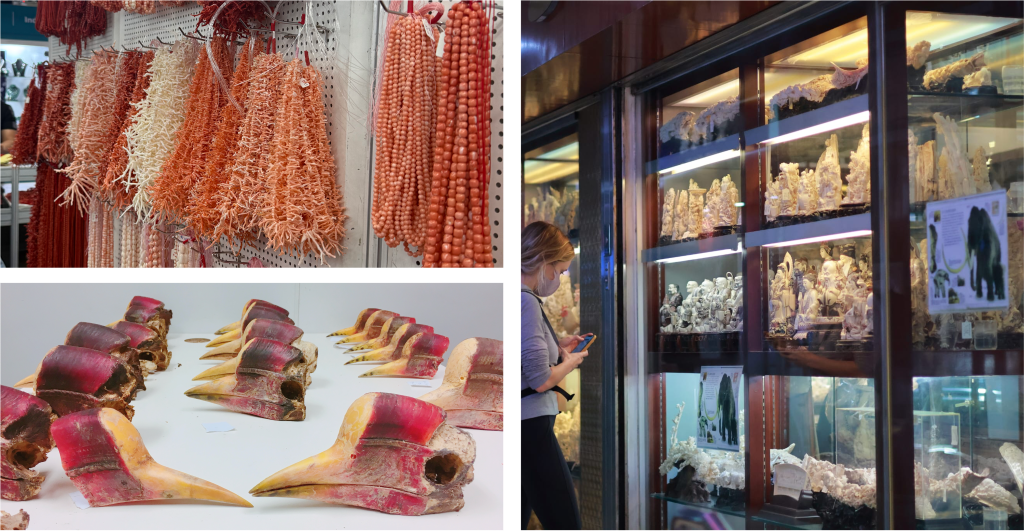
Interested to study wildlife trade in the global trade hub of Hong Kong?
Email me: chloewebster@ln.edu.hk
My team works on projects covering wildlife trade, wildlife forensics, and conservation biology. We are currently working on corals, hornbills, and sea cucumbers – but I am also open to discuss projects on other species with prospective lab members.
I am also affiliated with Prof Inga Conti-Jerpe’s lab at Lingnan University, Hong Kong, so any students and Research Assistants or students would be part of our wider lab.
Prospective students can apply to the Hong Kong PhD Fellowship Scheme, which offers competitive annual stipends (~$43,000 USD) and travel allowances (~$1,800 USD). The application typically opens in early September and is due early December.
Students with a successful application for PhD study in the lab but not successful in an HKPF application receive a monthly stipend (HK$18,900) and medical benefits, and are required to pay annual tuition (~42K HKD). Local students can apply for a tuition waiver.
Once accepted, students are also able to apply for housing in the campus hostels (dorms), which offer extremely competitive prices (~$1000 USD per semester).
Current lab
PhD students
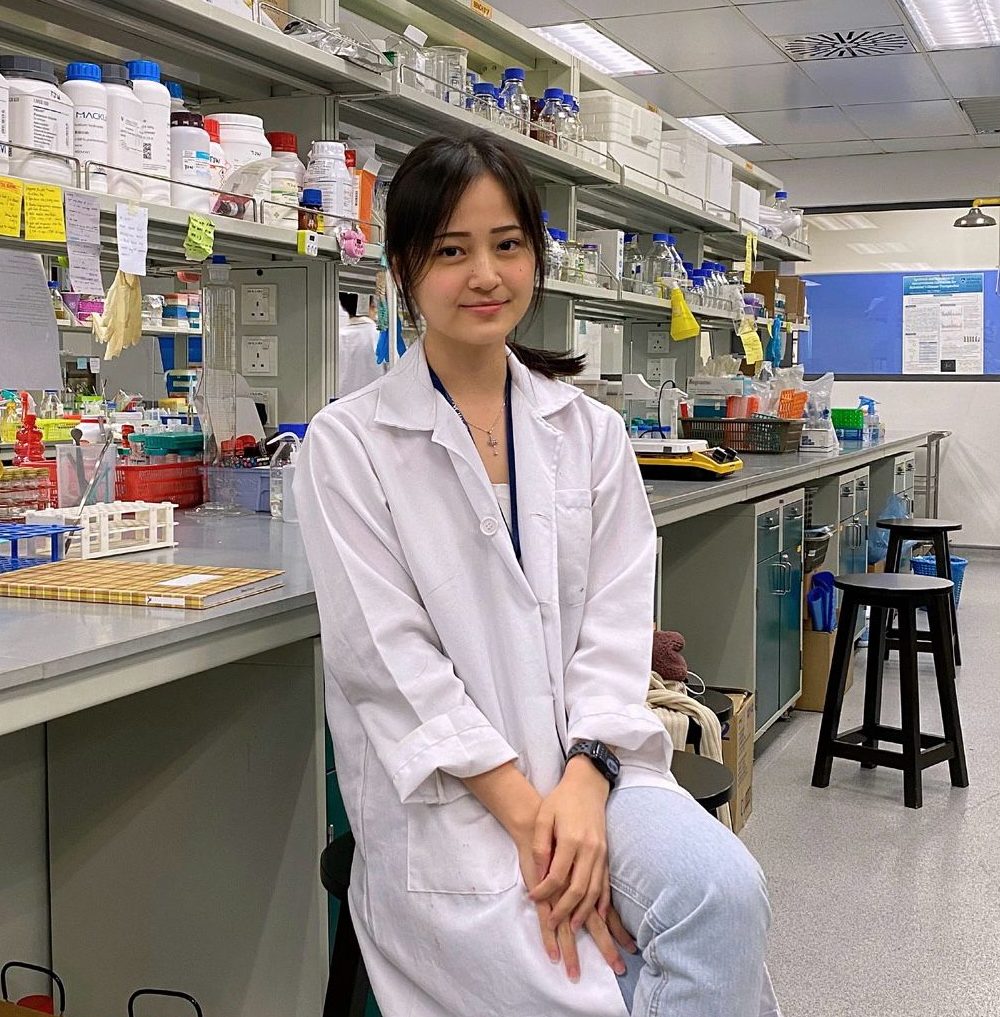
Ms Carisa Wong. Monash University, Malaysia
I am a third-year PhD candidate at Monash University Malaysia, co-supervised by Prof. Qasim Ayub (Monash University, Malaysia), Dr. Chloe Hatten (Lingnan University, Hong Kong), and Prof. Sadequr Rahman (Monash University, Malaysia). My research bridges genetics, bioinformatics, and wildlife conservation to safeguard Southeast Asia’s threatened helmeted and rhinoceros hornbills.
Using PacBio HiFi and Oxford Nanopore sequencing, I generated the first long-read reference genomes for these species. By comparing whole-genome resequencing data between historical museum specimens and modern populations, my work revealed significant genetic diversity loss and elevated inbreeding in present-day helmeted hornbills. Furthermore, I identified candidate genes (TOX2, SLIT3) responsible for the development of the helmeted hornbill’s solid casque—an iconic trait exploited in the illegal wildlife trade. Ultimately, my research delivers foundational genomic insights to advance wildlife forensics and inform targeted conservation management for the survival of these ecologically vital birds.

