
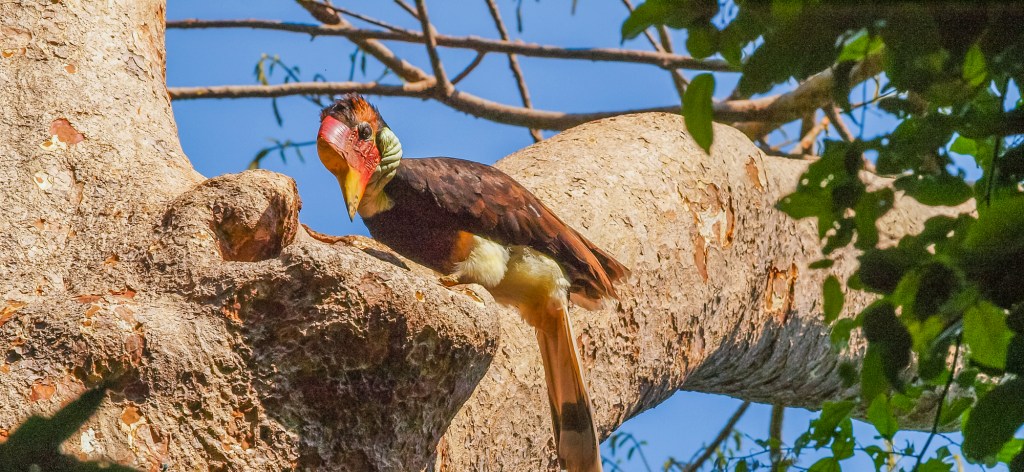
Hornbills. Tree homeowners. Master vocalists. Forest farmers. These giant birds can be seen and heard right across dense primary rainforests to the driest of savannahs. They represent 62 species spread across Africa and Asia with a diverse array of colours and calls. Many of these birds can fly up to 100s of kilometres, sowing seeds with their faeces. They keep the forests going and the carbon sequestered.
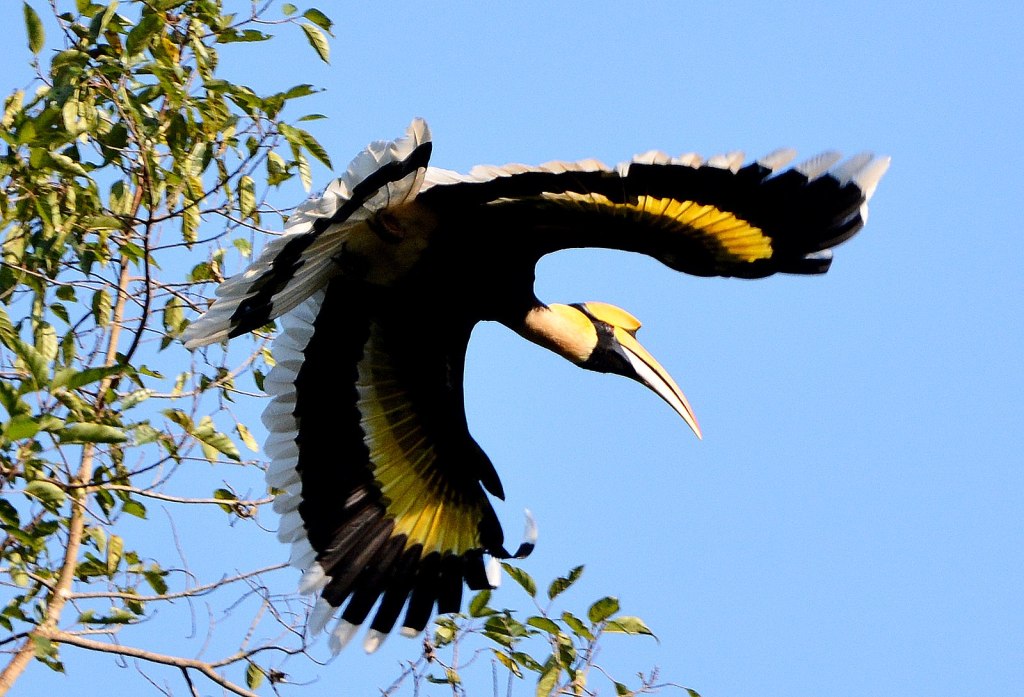
Humans have long had close ties to these special birds. Their calls represent suffering in ancient Ethiopian proverbs, their names translate into symbols of faith in Zulu, and their flight provides signs from the deities in Bornean Dayak cultures. The Malaysian state Sarawak is even known as “Land of the Hornbills“, with a hornbill stamped onto the Malaysian 5 ringgit note, to make the point.
Humans also use, as well as revere, these animals. Skulls, beaks, feathers, and casques (the protrusion above the bird’s beak) fashion as cultural dress items across India and Malaysia in traditional gatherings and performances. Hornbills have also been traditionally hunted for meat and medicine.
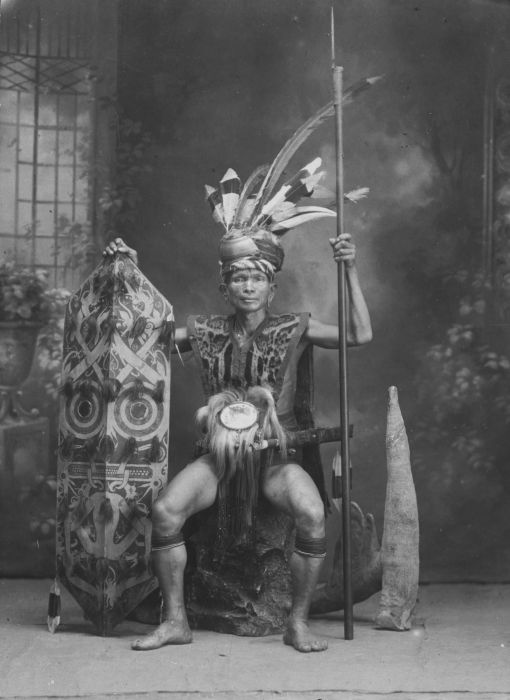
Tropenmuseum, part of the National Museum of World Cultures, Wikipedia. CC BY-SA 3.0
Nowadays, hornbills, like many other wild species, are threatened with the human tendency to over-consume.
Take the Helmeted hornbill, for example.
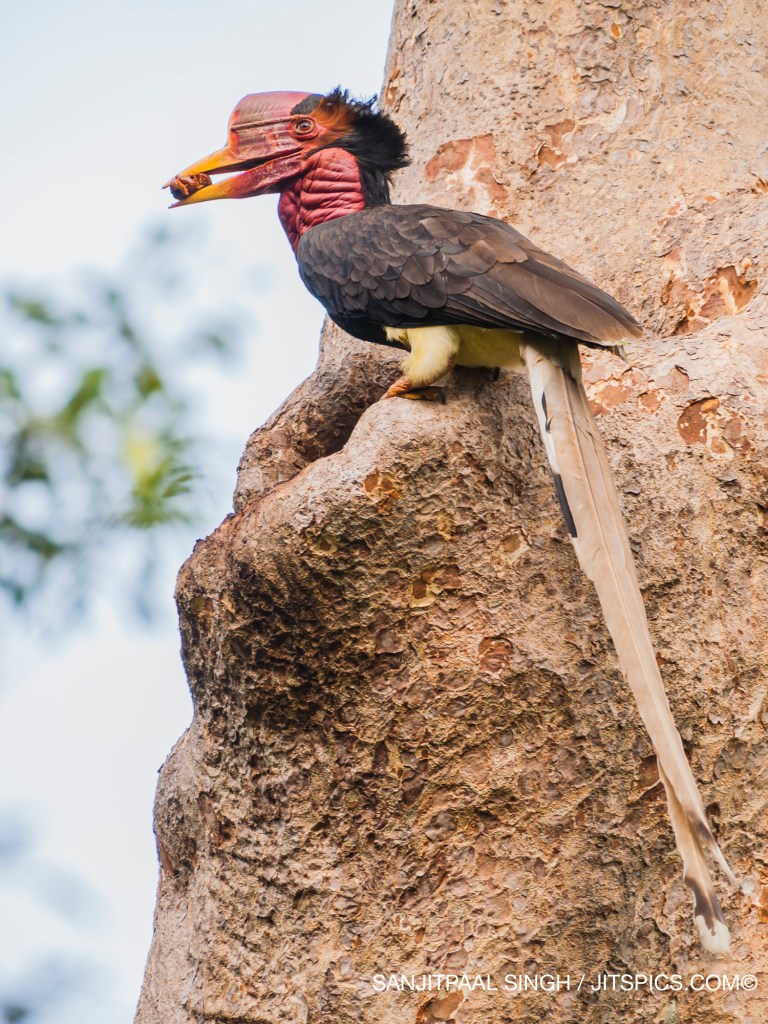
Male Helmeted hornbill with fig in beak by a nest cavity hole, Malaysia. Credit, and for featured image: JITSPICS.
This species is the only one with a solid casque. People have been hunting and killing these birds for centuries in order to carve objects out of the hard yellow material, and trade them as gifts.

Credit: TRAFFIC International.
However in 2015, due to the continued trade for the Helmeted hornbill’s casque, the species was listed as “Critically Endangered” on the IUCN Red List for Threatened Species. One category away from Extinction. The species is also regulated under the top category (Appendix I) for international trade by CITES, meaning that commercial trade is banned.
Yet the trade continues, and the species remains threatened.
The IUCN put together a Helmeted Hornbill Working Group (HHWG) to conserve the species. Actions under the working group’s 10-year Conservation Strategy Action Plan include anti-poaching efforts, and on-the-ground protection in range states, and demand reduction in consumer countries. Through scientific research, community empowerment, and policy-changing efforts, this plan aims to buck the trend of illegal human consumption of this endangered species.
As part of the IUCN HHWG, I have developed multiple scientific and forensic projects, providing actionable outcomes to help progress this collaborative conservation work. You can read more about my work on the Research pages.
As part of the IUCN HHWG, I have developed multiple scientific and forensic projects, providing actionable outcomes to help progress this collaborative conservation work. You can read more about my work on the Research pages.
Cackling calls.. ooh-ooh,
Tree-tops rustle out of sight,
Flying free and high.
A Haiku.
 Chloe Hatten
Leave a comment